A Comparative Critical Analysis of the Concept of the Rival in the Poetry of Ghalib and Faiz
Keywords:
Mirza Ghalib, Faiz Ahmed Faiz, Raqeeb (Rival), Urdu Poetry, Classical and Progressive Literary TraditionsAbstract
This study explores the concept of the Raqeeb (rival) in the poetry of Mirza Ghalib and Faiz Ahmed Faiz, examining its evolution from classical to modern Urdu poetry. Ghalib, a nineteenth-century poet, represents the classical tradition, combining wit, personal sensitivity, and subtle humanism within a socio-political context marked by the decline of the Mughal Empire and the 1857 rebellion. Faiz, writing nearly half a century later, emerged under progressive and socialist influences, advocating social justice and humanistic ideals. Despite the temporal gap, Faiz exhibits a deep intellectual and stylistic engagement with Ghalib, borrowing metaphors, symbols, and even titles of his works while reinterpreting them in light of contemporary political and social struggles. The study highlights how both poets depict the Raqeeb not merely as a romantic adversary but as a complex symbol reflecting societal, emotional, and ethical dimensions. While Ghalib often approaches the rival with suspicion tempered by human empathy, Faiz extends this concept, transforming the rival into a political and emotional metaphor that embodies solidarity, shared grief, and humanistic values.
Downloads
Published
How to Cite
Issue
Section
License
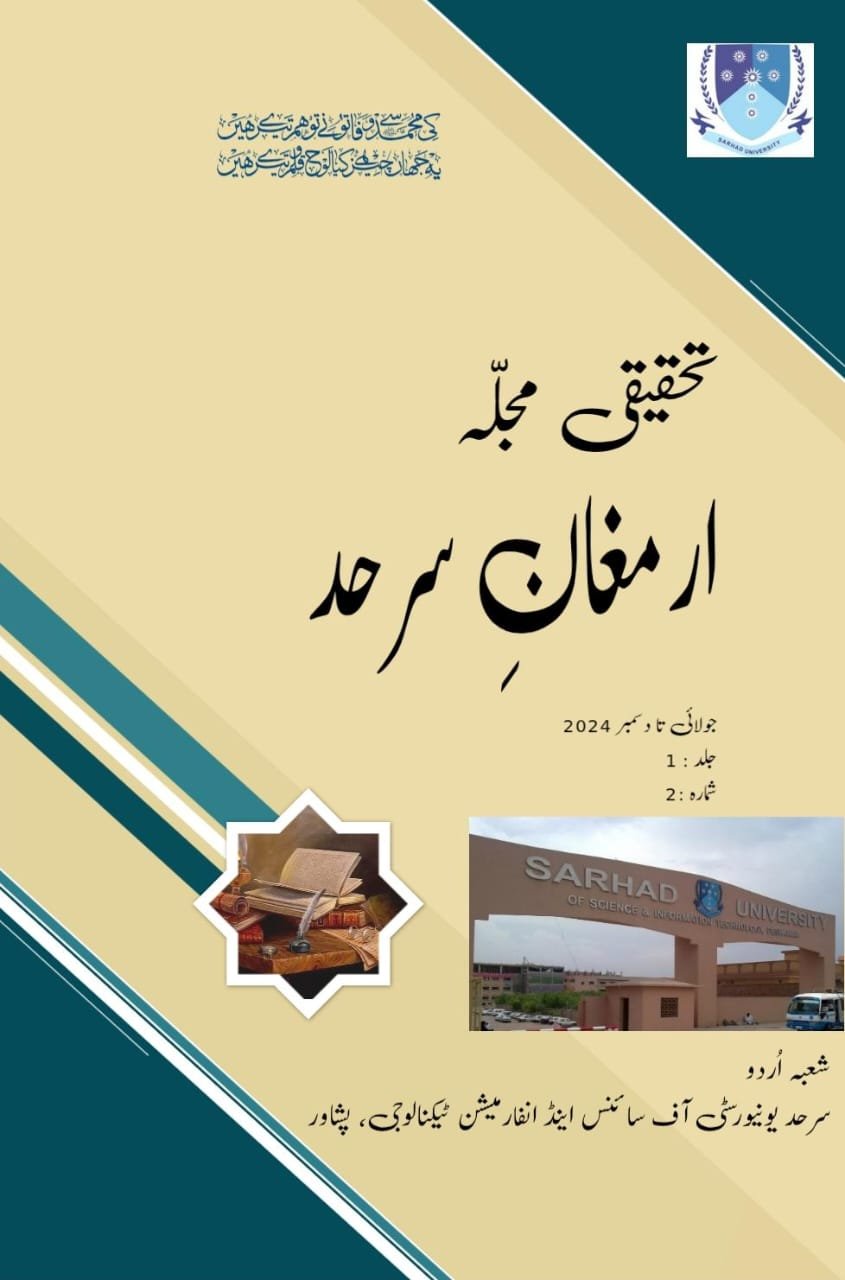
Copyright (c) 2025 URDU RESEARCH JOURNAL: ارمغانِ سرحد

This work is licensed under a Creative Commons Attribution 4.0 International License.
All articles are published under the Creative Commons Attribution 4.0 (CC BY 4.0) license.
Authors retain copyright and grant the journal the right of first publication.
Users may read, download, copy, distribute, and reuse the content with proper attribution to the author(s) and source.