"Devotional Praise in the Rubaiyat of Deccani Poets"
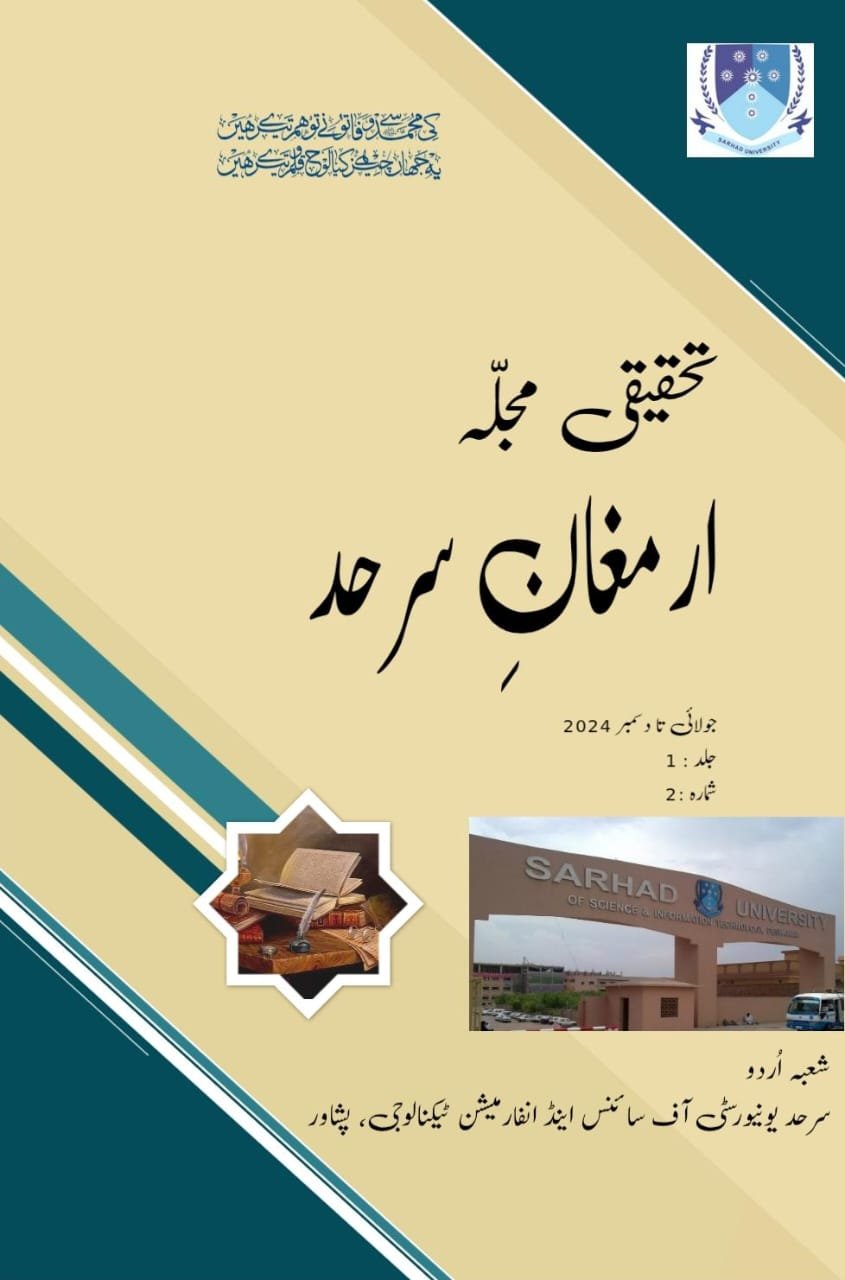
دکنی شعرا کی رباعیات میں حمدنگاری
Abstract
The devotional rubaiyat (quatrains) composed by the poets of Deccani Urdu literature represent a distinctive and valuable contribution to the evolution of Urdu poetry. These quatrains are not confined to expressions of religious devotion alone; they also demonstrate remarkable artistic refinement, linguistic elegance, and spiritual depth. During the Deccani period, the rubai emerged as an important poetic form due to its ability to convey profound ideas within a brief and compact structure. Deccani poets effectively employed this genre to express their unwavering faith in Allah, praise His divine attributes, and communicate their inner spiritual experiences with sincerity and poetic beauty. Their devotional rubaiyat reflect themes such as divine love, humility, gratitude, repentance, submission to God's will, and the quest for spiritual enlightenment. In addition to their theological significance, these quatrains embody the cultural and literary ethos of the Deccan, where Persian, Arabic, and indigenous traditions merged to shape a unique poetic identity. The concise yet expressive nature of the rubai enabled poets to combine philosophical reflection with devotional emotion, producing verses of lasting literary value. This study examines the thematic, stylistic, and aesthetic features of Deccani devotional rubaiyat, highlighting their contribution to the development of Urdu literature and demonstrating how they enriched both the religious and artistic traditions of classical Urdu poetry.
Downloads
Published
How to Cite
Issue
Section
License
Copyright (c) 2026 Suliman Shah, Dr. Hameed Ulfat Mulghani

This work is licensed under a Creative Commons Attribution 4.0 International License.
All articles are published under the Creative Commons Attribution 4.0 (CC BY 4.0) license.
Authors retain copyright and grant the journal the right of first publication.
Users may read, download, copy, distribute, and reuse the content with proper attribution to the author(s) and source.